

- AVAILABILITY: IMMEDIATE | Ships in 24/48h ore
- Model: ACR-BLS
- SKU: acr/bls
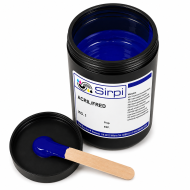
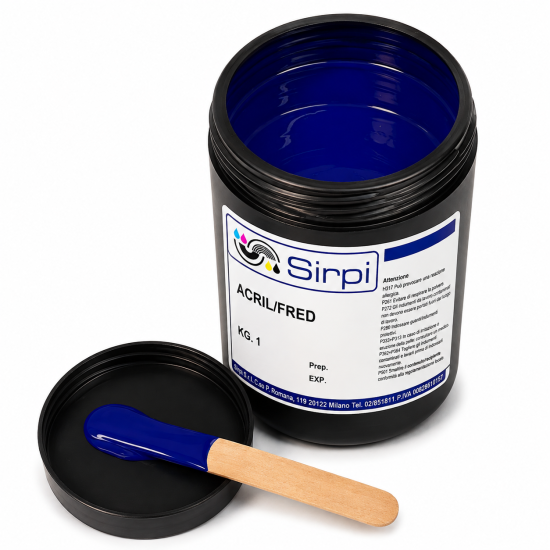
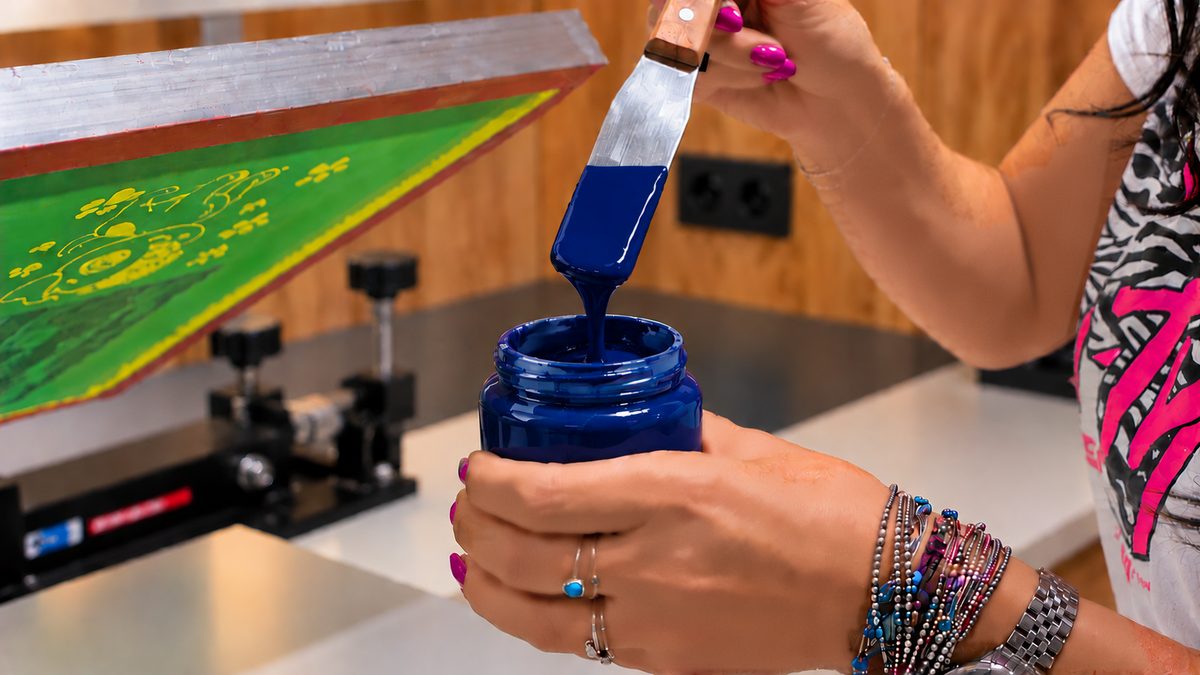
ACRILTEX dark blue water-based screen printing ink for t-shirts
Colour: Dark blue
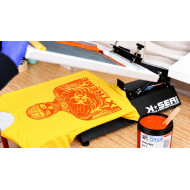
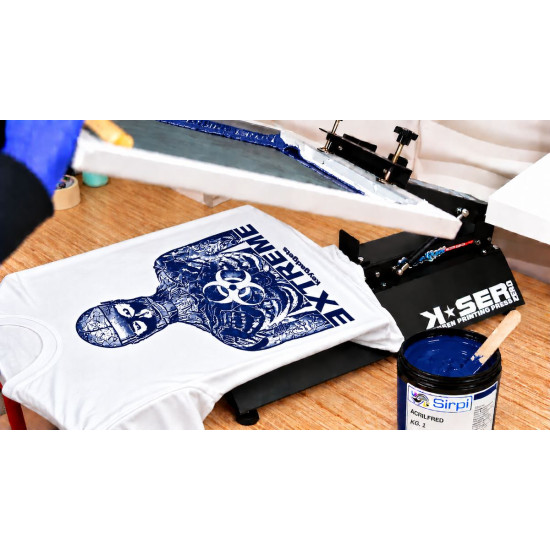
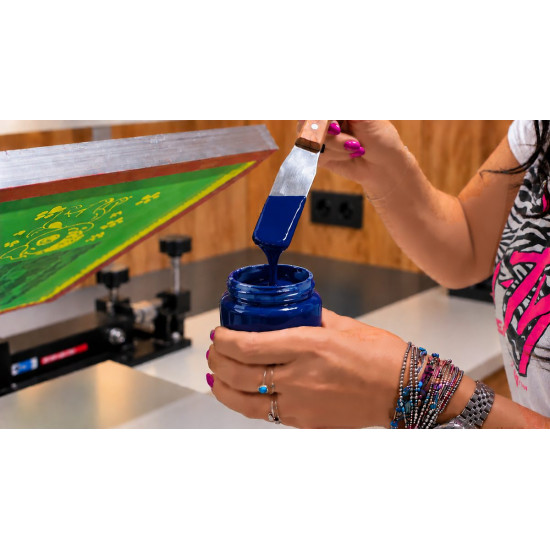
ACRILTEX is a water-based screen printing ink made for printing on t-shirts and fabrics. Dark blue gives a bright colour and leaves a soft print that bends with the fabric without cracking. Being water-based, it has a mild smell and cleans up with water, so it works well both in a professional workshop and for DIY screen printing, when you print your first t-shirts. It comes in 250 g, 500 g and 1 kg jars.
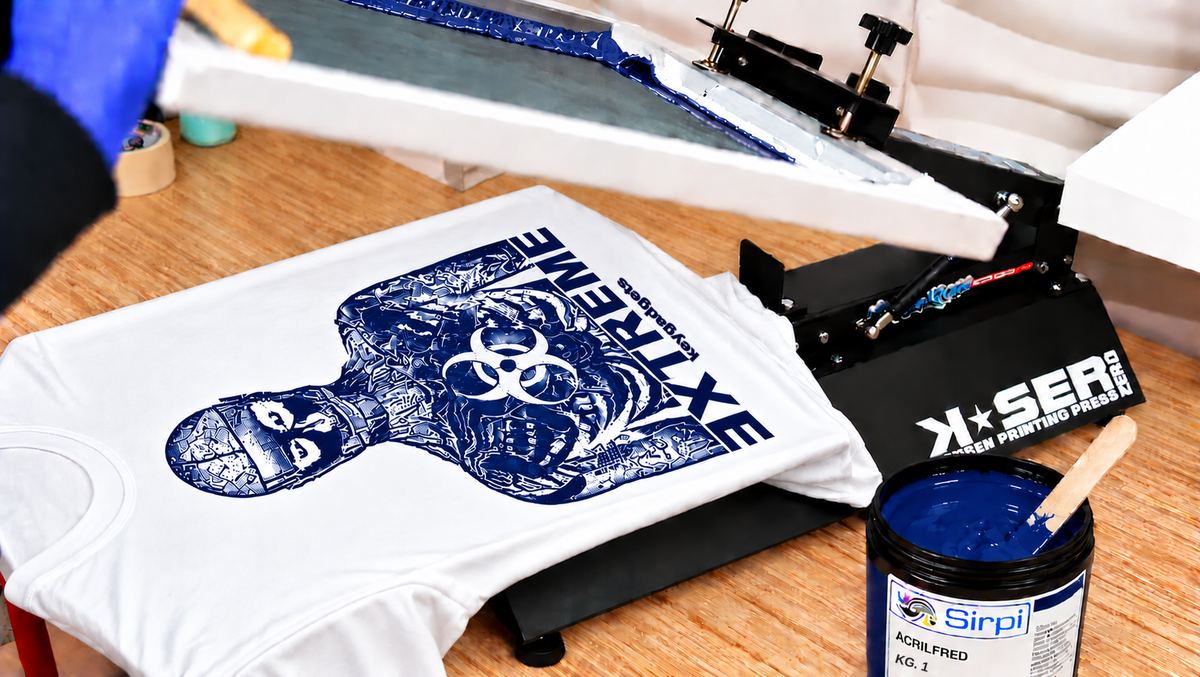
Not just cotton: it also prints on synthetic fabrics
Many water-based inks only stick well to 100% cotton. ACRILTEX is suitable for printing on any type of fabric: cotton, blends, acrylic, polyester, polyamide and non-woven fabric such as Tyvek.
On all these fabrics it has good adhesion and good covering power. With the same jar you can print cotton t-shirts, polyester or blended garments and non-woven tote bags.
Features
It has a balanced consistency: it flows well through the screen mesh and does not clog it during printing, so coverage stays even from the first t-shirt to the last. It works for both manual printing and automatic machines. It is an FPT ink (Food Packaging and Toys), compliant with EN 71 part 3 on toy safety.
Which screen to use
To print on t-shirts and fabrics use a 55T screen printing frame or a 77T screen printing frame. The number tells you how many threads there are in one centimetre of mesh: fewer threads mean wider openings, so more ink goes through.
55T is the most used screen for t-shirt printing: it lays down a thicker layer of ink and gives a stronger colour, useful on large solid areas. 77T lays down less ink but reproduces fine details better, such as small text and thin lines: choose it when the design has a lot of detail.
To prepare the screen use a water-resistant photo emulsion, such as Plus 7000 screen printing emulsion: an emulsion not made for water-based inks would dissolve during printing.
Thinning
The ink is ready to use, so in most cases it does not need thinning. If you find it too thick you can add up to 5% water, that is at most 50 g of water per 1 kg of ink. Keep in mind that the more you thin it, the softer the print but the less it covers: so it is best to thin it as little as possible.
If the ink dries too fast in the screen, which happens in hot weather or when you print many t-shirts in a row, use ACRILTEX retarder thinner instead of water. It slows down drying in the screen mesh and does not change the properties of the ink.
Drying and heat curing
After printing, the ink air dries in 20-30 minutes: less in a warm, ventilated room, more in a cold, damp one. At that point the print is dry to the touch, but the ink reaches full resistance only over the following days.
With heat you can speed up drying and make the print more resistant to washing. The right temperature is 90 °C, and the time depends on your equipment:
- Screen printing oven: 3-4 minutes
- Heat press: 5 to 20 seconds
- Iron: iron the print at 90 °C with a sheet of silicone paper or baking paper between the iron and the t-shirt, so the ink does not stick to the iron
To dry faster between prints you can also use a heat gun. If you want to learn more, our guide explains how to cure water-based inks step by step.
If you print on polyester or other synthetic fabrics, which do not absorb like cotton, drying takes longer. On absorbent fabrics it is faster.
More wash resistance with the hardener
If the t-shirts will be machine washed often, as with uniforms, workwear or t-shirts for sale, add ACRILTEX hardener to the ink. The dose is 40 g of hardener per 1 kg of ink: 20 g is enough for a 500 g jar, 10 g for a 250 g jar. Mix carefully until the blend is even, then print as usual.
Once the hardener is added the ink starts to harden, so it must be used within 5-7 days, kept in a tightly closed jar. That is why it is best to add hardener only to the amount you expect to use in those days.
Before machine washing the print, wait at least 2-3 days, and at least 4-5 days before dry cleaning: this is the time the ink needs to harden completely. ACRILTEX hardener must be used only with ACRILTEX inks.
Cleaning
Screen, squeegee and spatulas clean up with water. Do it right after printing, while the ink is still wet: if it dries inside the screen mesh it becomes much harder to remove and the screen may be damaged.
Storage
Keep the jars tightly closed, in a dry place at room temperature. The ink must not freeze and should not be kept above 30 °C: frost and excessive heat ruin its consistency. So in winter do not leave it in an unheated warehouse or van. In the original sealed pack it keeps for at least 12 months.
After each use close the jar tightly: air dries the ink on the surface and forms a skin that then ends up in the screen.
Technical data
| Type | Water-based textile screen printing ink |
| Series | ACRILTEX |
| Colour | Dark blue |
| Pack sizes | 250 g, 500 g, 1 kg |
| Fabrics | Cotton, blends, acrylic, polyester, polyamide, non-woven fabric (Tyvek) |
| Recommended screen | 55T or 77T (77T for designs with fine details) |
| Thinning | Up to 5% water, or ACRILTEX retarder thinner |
| Air drying | 20-30 minutes |
| Heat curing | 90 °C: oven 3-4 min, heat press 5-20 s, iron with silicone paper |
| Hardener | 40 g per 1 kg of ink, use within 5-7 days |
| Cleaning | Water, right after printing |
| Compliance | FPT, EN 71 part 3 |
| Storage | Dry place, room temperature, max 30 °C, protect from frost. At least 12 months in the sealed pack |
If you want to understand the differences between water-based and plastisol inks, read our guide what are water-based inks.