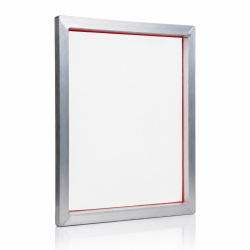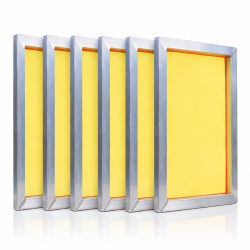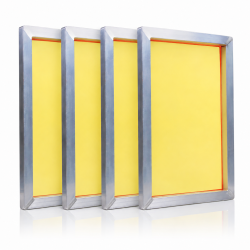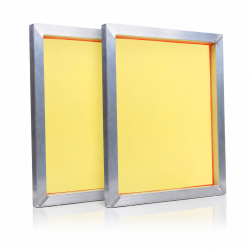
Mesh count is a measurement used in screen printing that refers to the number of threads per inch in a screen printing mesh. It determines how much ink can pass through the screen and how much detail can be reproduced in the printed image.
Mesh count is one of the most important variables in screen printing. Choosing the correct mesh count directly affects ink deposit, print opacity, image sharpness, and overall print quality.
Key characteristics of mesh count
Mesh count defines the structure and ink flow behavior of a screen printing mesh. Key characteristics include:
● Number of mesh threads per inch
● Size of the openings between threads
● Amount of ink deposited during printing
● Level of detail the screen can hold
● Compatibility with different ink types
These characteristics help control both visual and functional print results.
How mesh count affects the printing process
Mesh count influences how ink moves through the screen and onto the substrate. The printing process impact typically includes:
● Lower mesh count allowing more ink to pass through
● Higher mesh count restricting ink flow
● Thicker ink deposits with low mesh screens
● Finer detail reproduction with high mesh screens
● Changes in print texture and opacity
Selecting the right mesh count ensures balance between coverage and detail.
Common mesh count ranges and uses
Different mesh count values are used for different printing applications. Typical mesh count ranges include:
● 60–110 mesh for thick inks and bold designs
● 110–160 mesh for standard textile printing
● 160–230 mesh for fine detail and halftones
● 230+ mesh for high-detail graphic printing
● Specialized mesh counts for industrial printing
Each range is matched to ink type, artwork complexity, and substrate.
Mesh count compatibility with inks
Mesh count must be compatible with the viscosity and behavior of the ink being used. Common compatibility guidelines include:
● Low mesh count for plastisol and specialty inks
● Medium mesh count for standard textile inks
● High mesh count for water based inks
● Very high mesh count for solvent inks and fine graphics
● Adjustments based on ink opacity requirements
Incorrect matching can lead to poor coverage or clogged screens.
Where mesh count is most important
Mesh count plays a critical role in all screen printing applications. Typical use cases include:
● T-shirt and garment screen printing
● Graphic and poster printing
● Industrial and technical screen printing
● Promotional product printing
● Manual and automatic screen printing setups
Every screen printing job requires proper mesh count selection.
Advantages of choosing the correct mesh count
Using the correct mesh count improves both print quality and production efficiency. Main advantages include:
● Better ink control and consistency
● Sharper details and cleaner edges
● Reduced ink waste
● Improved print durability
● Predictable and repeatable results
These advantages make mesh count selection a key skill in screen printing.
Mesh count is the number of threads per inch in a screen printing mesh that controls ink flow, detail, and print quality. By selecting the correct mesh count, printers can achieve clean, durable, and professional results across a wide range of screen printing applications.