
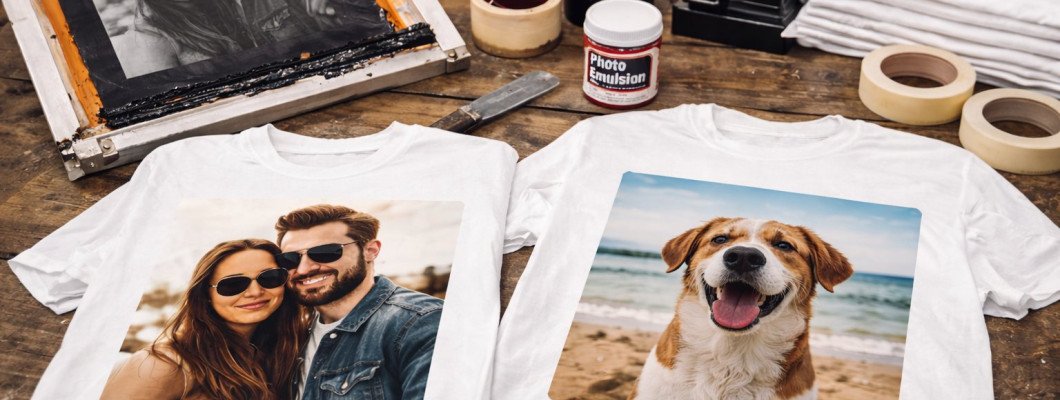
Screen printing photos on T-shirts at home is easier than many beginners expect, especially with the help of modern screen printing starter kits. What once required a professional workshop can now be done on a small scale at home, using simple tools and a clear process. This is why more people are exploring screen printing as a creative hobby, a way to personalise clothing, or simply to bring their own designs to life without relying on external printing services.
For beginners, the idea of printing photos or detailed images on fabric may sound complicated at first. Questions often come up about image quality, preparation, and whether screen printing can really work outside of a professional environment. The good news is that screen printing kits are designed to simplify the process, allowing beginners to focus on learning the basics step by step. With the right approach, it is possible to achieve clean, durable prints on T-shirts even during the first attempts.
This guide is created for people who want to screen print T-shirts at home using starter kits, without prior experience. It explains what you need, how to prepare photos for screen printing, and how to go through the process clearly and practically. Instead of professional workflows or industrial setups, the focus here is on simple, beginner-friendly techniques that help you get real results while learning how screen printing works in practice.
What You Need to Screen Print T-Shirts at Home
Screen printing T-shirts at home starts with understanding the basic tools involved in the process. While professional setups can include advanced equipment, beginners can achieve good results using a simple screen printing starter kit. These kits are designed to remove guesswork by combining compatible tools that work well together, which is especially helpful when learning for the first time.
A home screen printing setup does not require much space, but it does benefit from basic organization. Having a dedicated area for printing and drying helps avoid smudges and uneven results. Before starting, it’s essential to ensure that all tools are clean and ready for use, as screen printing relies heavily on meticulous preparation rather than speed.
A basic home screen printing setup usually includes the following items:
- A screen and frame suitable for textile printing
- Fabric-safe screen printing ink
- A squeegee matched to the screen size
- Basic screen preparation and cleaning tools
- A flat surface and space for drying printed T-shirts
TIP: Beginner screen printing kits are often the easiest way to ensure that all components work well together.
With these essentials in place, beginners can focus on learning the printing process itself. Starting with a simple setup makes it easier to understand how pressure, ink, and alignment affect the final print.
Preparing Photos for Screen Printing
Preparing photos for screen printing is a crucial step that directly affects print quality. Unlike digital printing, screen printing requires images to be translated into clear shapes that can pass ink through a screen. For beginners working at home, this means simplifying photos so they reproduce well on fabric without losing their main visual impact.
The preparation stage usually involves working with basic image-editing tools to adjust contrast and remove unnecessary details. Highly complex images with subtle gradients can be difficult to print using starter kits, so choosing or editing photos with clear light and dark areas produces better results. This step may take some experimentation, but it greatly improves the final outcome.
When preparing photos for screen printing at home, beginners typically follow these steps:
- Convert the image to black and white or high contrast
- Adjust brightness and contrast to sharpen details
- Remove background elements that are not needed
- Resize the image to fit the screen and T-shirt
- Print the final design on transparent film or suitable transfer material
TIP: Test your image on paper first to check clarity before moving on to screen exposure.
Spending time on proper photo preparation reduces frustration during printing and helps beginners understand how digital images translate into physical prints on T-shirts.
How to Screen Print Photos on T-Shirts Step by Step
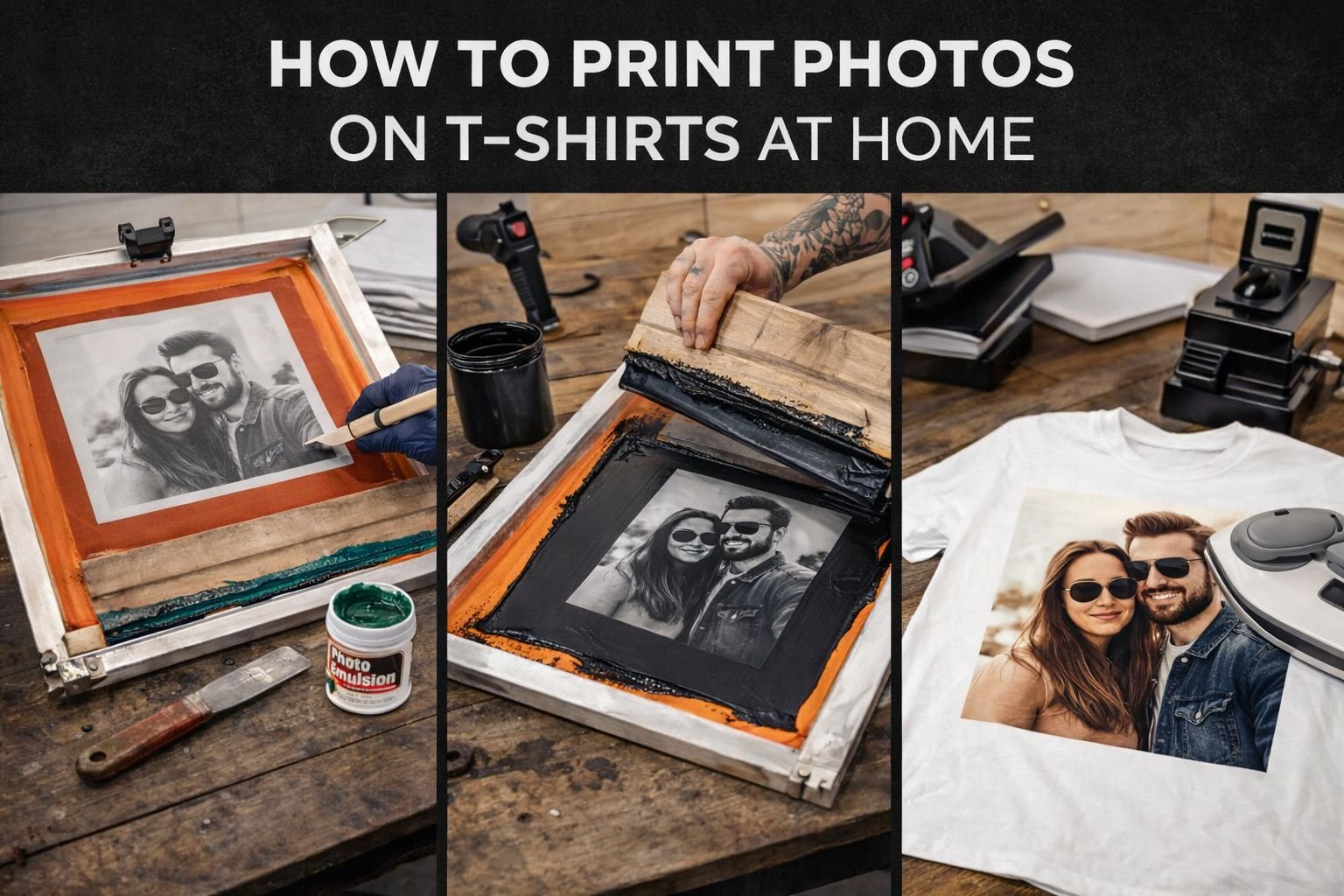
Once your tools are ready and your photo is properly prepared, you can move on to the actual screen printing process. At-home screen printing with a starter kit follows the same core principles as professional printing, just on a smaller and more accessible scale. The key for beginners is to work slowly and focus on consistency rather than speed.
Before applying ink, make sure the T-shirt is placed on a flat surface and the screen is aligned correctly. Proper alignment helps avoid blurred edges and uneven prints. Applying even pressure with the squeegee is more important than force, especially when printing photos that contain fine details.
A basic step-by-step process for screen printing photos on T-shirts at home looks like this:
- Place the prepared screen on the T-shirt and secure it
- Add a small amount of ink to one side of the screen
- Pull the squeegee smoothly across the screen with even pressure
- Lift the screen carefully to check the print
- Allow the print to dry before handling or curing
TIP: One smooth pass with the squeegee often produces better results than multiple uneven strokes.
Repeating this process helps beginners develop a feel for pressure, ink flow, and alignment. With practice, prints become more consistent and confident, even when working with photo-based designs.
Common Mistakes When Screen Printing at Home
Screen printing at home is a learning process, and mistakes are part of gaining experience. Many beginner issues are not caused by poor equipment, but by rushing steps or skipping preparation. Knowing what to watch out for helps reduce wasted materials and improves results much faster.
One of the most common mistakes is using too much ink or applying uneven pressure, which can cause blurry or smudged prints. Another frequent issue is improper screen alignment, especially when printing photos that require precision. Beginners may also rush the drying process, leading to damaged prints before the ink has fully set.
Some typical mistakes beginners encounter when screen printing T-shirts at home include:
- Applying too much ink during the first pass
- Using inconsistent pressure with the squeegee
- Moving the screen while printing
- Printing on wrinkled or uneven fabric
- Handling prints before they are fully dry
TIP: Slowing down and focusing on one variable at a time helps identify and fix problems more effectively.
By understanding these common mistakes, beginners can approach screen printing with more patience and awareness. Each attempt becomes an opportunity to refine technique and build confidence with home screen printing kits.
Tips for Better Screen Printed T-Shirts at Home
Improving screen-printed T-shirts at home is mostly about small adjustments rather than big changes. Beginners often see noticeable progress simply by refining their technique and paying attention to details. Working with starter kits allows you to experiment freely, which makes it easier to understand how different factors influence the final result.
Consistency plays a key role when printing photos on T-shirts. Using the same pressure, ink amount, and screen alignment across prints helps create more uniform results. It also helps to work in a calm environment, where you can focus on each step without rushing.
To achieve better screen-printed results at home, beginners should keep the following tips in mind:
- Use even, controlled pressure with the squeegee
- Apply only as much ink as needed for clean coverage
- Keep the screen and fabric properly aligned
- Allow enough drying time before touching the print
- Clean screens thoroughly after each session
TIP: Practising on spare fabric before printing on final T-shirts helps build confidence and reduce mistakes.
Over time, these small improvements add up. As the technique becomes more natural, prints start to look cleaner and more consistent, even when working with photo-based designs.
Is Screen Printing at Home Right for You
Screen printing at home is an appealing option for many beginners, but it is not the same experience for everyone. While starter kits make the process accessible, home screen printing still requires time, patience, and a willingness to learn through practice. Understanding whether this method fits your expectations helps avoid frustration and makes the experience more enjoyable.
For people who enjoy hands-on creative work, screen printing can be very rewarding. It allows full control over designs, materials, and the printing process itself. At the same time, those looking for instant or perfectly repeatable results may find the learning curve challenging at first, especially when working with photo-based designs.
Screen printing at home is often a good choice for people who:
- Enjoy experimenting and learning new skills
- Want to customise small batches of T-shirts
- Prefer a hands-on creative process
- Are comfortable working with simple tools
- Have space to set up a basic printing area
TIP: Starting screen printing as a hobby helps build skills without the pressure of perfect results.
By setting realistic expectations, beginners can approach screen printing at home with a positive mindset. When treated as a learning experience rather than a shortcut, home screen printing becomes a flexible and enjoyable way to explore creative ideas.
Conclusion: Screen Printing Photos on T-Shirts at Home
Screen printing photos on T-shirts at home is a practical and rewarding way to explore creativity using simple tools and starter kits. While the process may seem complex at first, it becomes much more approachable once the basic steps are understood and practised. With patience and repetition, beginners can achieve satisfying results without needing professional equipment.
Every stage of the process - from preparing photos to pulling the squeegee - contributes to the final outcome. Early mistakes are part of learning and often provide the most valuable lessons. By focusing on preparation, consistency, and realistic expectations, beginners can steadily improve their screen printing skills at home.
Ultimately, screen printing is not just about the final print, but about understanding the process behind it. Taking the time to learn each step builds a strong foundation that can grow into more advanced techniques over time, whether screen printing remains a hobby or becomes something more.
Leave a Comment