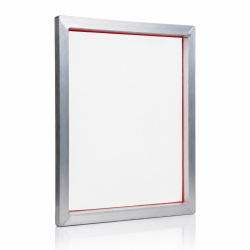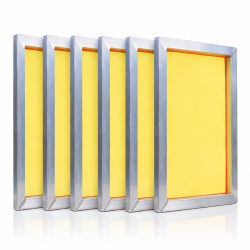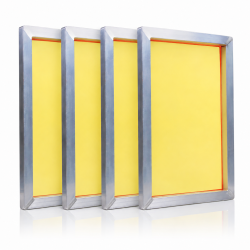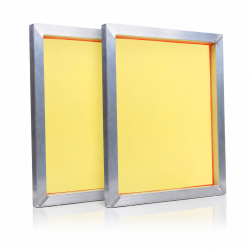
A screen printing frame is a rigid structure used to hold and
tension mesh fabric during the screen printing process. The frame provides
stability, keeps the mesh evenly stretched, and ensures accurate ink transfer
through the stencil onto the substrate.
The frame is a fundamental component of screen printing, as it
directly affects print quality, registration accuracy, and stencil durability.
Without a properly constructed frame, consistent and professional screen
printing results are not possible.
The role of a screen printing frame
The primary role of a screen printing frame is to maintain
consistent mesh tension throughout the printing process.
A screen printing frame helps by:
●
Holding the mesh securely in place
●
Preventing movement or distortion during
printing
●
Supporting the emulsion stencil
●
Maintaining accurate registration for
multi-color prints
●
Ensuring repeatable print results
A stable frame allows ink to pass through the mesh evenly,
resulting in clean edges and consistent coverage.
Materials used for screen printing frames
Screen printing frames are manufactured from different materials
depending on application, budget, and durability requirements.
The most common frame materials include:
●
Aluminum frames - lightweight, rigid, and
corrosion-resistant
●
Wooden frames - economical and commonly used
for basic or short-run printing
●
Steel frames - heavy-duty frames for
industrial or high-tension applications
Aluminum frames are the industry standard due to their strength,
stability, and long service life.
How mesh is attached to a screen printing
frame
Mesh is permanently or semi-permanently attached to the frame to
create a printing screen.
Common attachment methods include:
●
Adhesive bonding using industrial screen
printing glue
●
Mechanical tensioning systems on retensionable
frames
●
Pre-stretched mesh panels for modular frame
systems
Proper mesh attachment ensures even tension across the entire
surface, which is critical for accurate ink transfer and stencil performance.
Frame tension and its impact on print quality
Mesh tension is one of the most important factors influencing
screen printing results.
Correct tension provides:
●
Sharp print edges
●
Even ink deposit
●
Reduced stencil breakdown
●
Improved registration accuracy
●
Longer screen life
Low or uneven tension can cause blurred prints, inconsistent ink
flow, and misalignment between colors.
Retensionable vs fixed screen printing frames
Screen printing frames can be classified based on whether mesh
tension can be adjusted.
Main types include:
●
Fixed frames - mesh tension cannot be adjusted
once mounted
●
Retensionable frames - allow tension
adjustment over time
●
Modular frame systems - use interchangeable
mesh panels
Retensionable frames are commonly used in professional environments
to extend screen lifespan and maintain consistent tension.
Frame size and compatibility
Screen printing frames are available in various sizes to match
different printing machines and applications.
Key considerations include:
●
Print area dimensions
●
Machine clamp compatibility
●
Substrate size
●
Manual or automatic press requirements
Choosing the correct frame size ensures smooth workflow integration
and accurate print placement.
Where screen printing frames are commonly used
Screen printing frames are used across all screen printing
applications.
Typical uses include:
●
T-shirt and garment printing
●
Graphic and poster printing
●
Industrial and technical printing
●
Promotional product printing
●
Manual and automatic screen printing setups
Every screen printing operation relies on properly selected and
prepared frames.
Advantages of using quality screen printing
frames
High-quality frames improve both print results and production
efficiency.
Main advantages include:
●
Stable and repeatable printing performance
●
Longer mesh and stencil lifespan
●
Reduced setup errors
●
Improved color registration
●
Professional-grade print consistency
Investing in proper frames is essential for achieving reliable
screen printing results.
A screen printing frame is a rigid structure designed to hold mesh
under consistent tension during printing. By providing stability, accurate
registration, and stencil support, the frame plays a critical role in print
quality and process reliability. Proper frame selection directly impacts
efficiency, durability, and professional printing outcomes.