
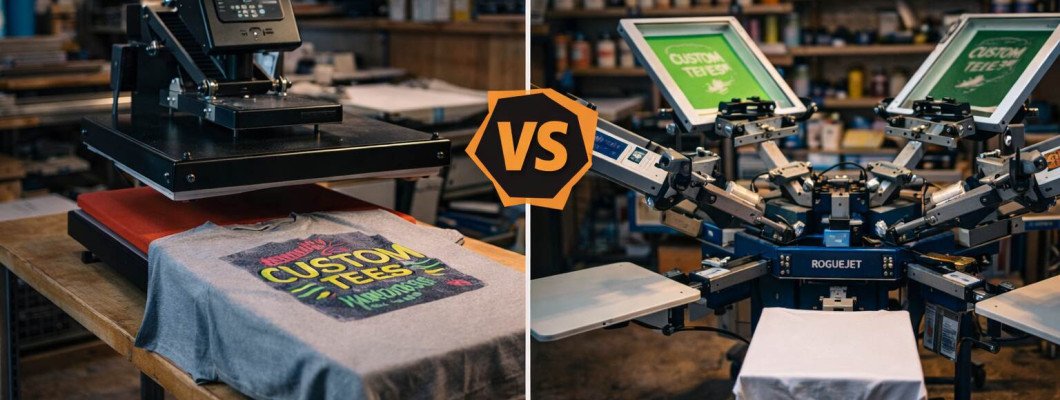
Choosing between heat press and silk screen printing is one of the most common dilemmas for beginners and small business owners entering the custom printing world. Both methods are widely used for decorating T-shirts, hoodies, tote bags, and promotional products, yet they work in completely different ways and serve different goals. The right choice depends not only on budget, but also on production volume, design type, material preferences, and long-term plans.
At first glance, heat press printing looks simpler and more accessible. It requires less equipment, takes up less space, and allows you to start producing results almost immediately. Screen printing, on the other hand, involves more preparation, more tools, and a deeper learning curve. But in return, it offers greater control over quality, durability, and scalability. Understanding how each method truly works in practice - not just in theory - is essential before investing in equipment or building a workflow around it.
This guide breaks down the real differences between heat press and silk screen printing, without bias and without unnecessary complexity. Instead of focusing on marketing claims, we’ll compare setup requirements, costs, print quality, production speed, and best use cases. By the end, you’ll have a clear understanding of which method fits your goals - whether you’re starting a small creative project or planning to build a serious printing business.
Heat Press Printing Explained
Heat press printing has become extremely popular because it offers one of the fastest ways to start producing custom products. For beginners, hobby creators, and small businesses testing ideas, this method removes many technical barriers. You don’t need to learn complex preparation processes or invest in a large set of professional tools. With the right approach, it is possible to begin offering personalized products within days, not months.
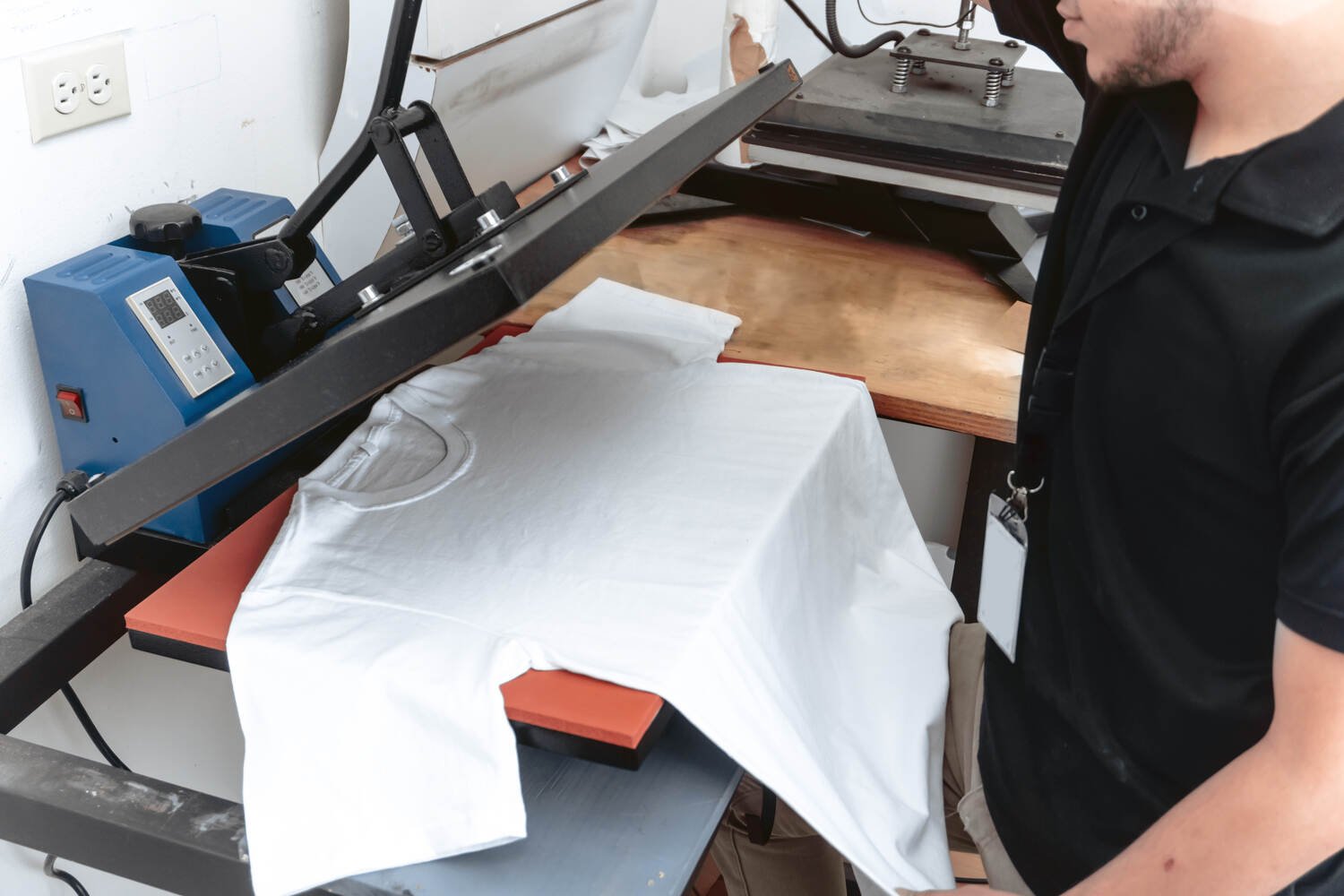
The method works by applying controlled heat and pressure to bond a design onto the surface of the material. This design can come from heat transfer vinyl, printed transfer sheets, or specialty films. The workflow is straightforward to repeat, which makes heat press printing attractive for short runs, customized items, and quick turnaround orders. However, the simplicity of the process also shapes its limitations, especially when production needs grow.
Heat press printing typically involves:
A heat press machine for applying temperature and pressure
Heat transfer vinyl (HTV) for cut designs
Transfer paper for printed designs
Cutting plotter (if working with vinyl)
Weeding tools for cleaning vinyl details
Blank garments or substrates for pressing
While the equipment list is relatively short, the long-term cost structure can become challenging. Materials like vinyl and transfer paper are consumed per item, which means profit margins often decrease as volume increases. In practice, heat press printing shines most in small batches, personalization, and creative flexibility, rather than high-volume production.
Screen Printing Process Overview
Screen printing has remained a dominant production method for decades because it combines durability, versatility, and efficiency. Although the learning curve is steeper than with heat press printing, the process rewards those who invest time into mastering it. For anyone thinking about building a long-term printing business, understanding the screen printing process is essential.
Instead of attaching a finished layer to the garment, screen printing applies ink directly into the fabric through a stencil. This allows for better ink absorption, stronger color depth, and superior wash resistance. The preparation stages require more tools and attention to detail, but they also open the door to professional-level results that are difficult to achieve with simpler methods.
A typical screen printing workflow follows clear stages, each of which influences the final quality:
Preparing the design and separating colors
Coating screen printing frames with emulsion
Exposing the design onto the screen using light
Washing out the stencil to reveal the image
Printing with screen printing inks using squeegees
Drying and curing the print for durability
TIP: Screen printing feels complex at first, but once the workflow becomes routine, it often becomes faster and more efficient than heat press when producing multiple copies of the same design.
Because the ink becomes part of the fabric rather than sitting on top of it, screen printed products generally feel more natural to wear and last significantly longer. This is one of the key reasons why professional apparel brands, merchandise producers, and large print shops continue to rely on screen printing as their primary method.
Heat Press vs Screen Printing Comparison
When choosing between heat press and screen printing, looking at real, practical differences is far more useful than general opinions. Each method performs better in specific situations, and understanding these distinctions can save both time and money. For small workshops especially, the decision often comes down to balancing flexibility, cost, and long-term potential.
The table below highlights the most important differences in everyday production.
TIP: If your focus is customization and short runs, heat press is often more practical. If your goal is building a long-term printing business, screen printing usually offers better scalability and profitability.
This comparison makes it clear that neither method is universally “better” - they simply serve different production strategies. The right choice depends on how you plan to grow.
Best Uses for Heat Press Printing
Heat press printing is most effective when flexibility and speed matter more than large-scale efficiency. Many successful creators and small brands use heat press not because it is more powerful, but because it allows them to respond quickly to customer demand without complex preparation.
This method is especially well-suited for:
Personalized T-shirts, names, and one-off designs
Small Etsy or online shop orders
Event merchandise with limited quantities
Prototypes and test products before mass production
Seasonal or limited-edition collections
Quick turnaround client requests
For creators who value creative freedom and rapid experimentation, heat press printing can be an excellent tool. It allows you to test ideas, validate products, and build an audience without the overhead and preparation that screen printing requires.
Best Uses for Screen Printing
Screen printing becomes especially powerful when consistency, durability, and production volume start to matter. While the setup requires more preparation, the payoff is clear when you move beyond one-off products and begin working with repeat designs or growing demand. This is why many established apparel brands and professional print studios rely primarily on screen printing.
This method is particularly well-suited for:
Bulk T-shirt and hoodie orders
Brand merchandise and long-term collections
Workwear and uniforms that require durability
Event merchandise for large audiences
Posters and art prints with strong color impact
Businesses that need consistent quality across batches
Screen printing also allows for greater control over ink types, textures, and special effects. Over time, this flexibility becomes a creative advantage, not just a technical one. For workshops aiming to grow beyond small experiments, screen printing often becomes the natural next step.
Conclusion: Which Printing Method Is Right for You
Choosing between heat press and silk screen printing is not about finding a universal winner - it is about understanding your own goals. Each method has its strengths, and both can be valid tools depending on the direction you want to take. Some creators prioritize speed and flexibility, while others value durability and scalability. Neither approach is wrong.
What matters most is aligning your method with your expectations. If you enjoy experimentation, personalization, and small creative projects, a simpler workflow may feel more rewarding. If you are motivated by process, consistency, and long-term growth, a more structured method can offer deeper satisfaction over time. The learning curve, the investment, and the workflow should feel like a challenge you are willing to embrace, not an obstacle.
In the end, printing is not only about technique - it is about building something tangible with your hands, improving through repetition, and finding your own rhythm in the process. With patience and curiosity, both methods can become meaningful tools for creativity and expression.
Leave a Comment