DIY Screen Printing Kits for Home Projects
DIY screen printing kit options featured in this category provide a practical and accessible way to start creating custom designs at home. Here at Keygadgets, you can find complete sets that include the tools and materials needed to print on textiles, paper, and various craft surfaces without relying on professional equipment. Each kit is thoughtfully assembled to support smooth setup, clean transfers, and consistent results, making them suitable for personal projects, small creative runs, and hobby-level printing.
This category is ideal for users seeking a simple, reliable entry point into screen printing — whether experimenting with T-shirt graphics, decorating accessories, or testing new artistic ideas. Every kit balances ease of use with dependable performance, offering enough versatility for beginners and those with growing experience. With components designed to work seamlessly together, these sets help you build confidence and achieve neat, repeatable prints directly from your home workspace.
Not sure which kit is right for you? Write to us on WhatsApp — our team will help you choose based on what you want to print and the space you have available.
Why choose a Keygadgets screen printing kit:
- Everything included — screen frame, squeegee, inks, instructions: nothing extra needed for your first print
- Easy to use — designed for complete beginners, with step-by-step instructions
- Rating 4.8/5 — based on verified customer reviews
- Built for beginners — balanced components, nothing oversized, nothing missing
- Direct support — technical questions? Our team responds on WhatsApp with 40 years of screen printing experience
Best screen printing kit for beginners
Screen printing kits for beginners in this category are designed to give new users a clear, straightforward introduction to the printing process. Each set includes essential tools that simplify learning and help you understand how mesh tension, ink flow, and frame stability contribute to clean, accurate prints. These kits are practical for small home workstations, creative studios, or anyone taking their first steps into screen printing without technical expertise.
Key components typically included in beginner-friendly kits:
- Pre-stretched screens that maintain reliable tension for even ink transfer
- Squeegees that ensure smooth application across different materials
- Starter inks suitable for textiles, paper, and various craft projects
- Basic alignment tools for steady, precise artwork placement
- Helpful accessories that streamline setup, cleaning, and reuse
With these structured tools and materials, newcomers can focus on practising core techniques and developing confidence without the complexity of advanced equipment. Whether exploring creative crafts or preparing your first prints, these kits simplify each stage of the process and provide the stability needed to progress from early experiments to polished results.
T-Shirt Screen Printing Kits for Custom Apparel
T-shirt screen printing kits offer a practical solution for creating personalised apparel at home or in small creative studios. These sets are built to help users transfer artwork, logos, and text onto garments with clean edges and consistent coverage. Whether you're developing a small clothing line, producing limited-run designs, or exploring new textile ideas, a screen print DIY kit includes the essential tools required for smooth, repeatable printing on T-shirts and other fabric items.
Typical components included in T-shirt printing kits:
- Pre-assembled frames that hold stable mesh tension throughout printing
- Squeegees designed for both fine details and bold, graphic transfers
- Starter inks compatible with cotton, blends, and various garment fabrics
- Simple positioning tools for centred, accurately aligned prints
- Accessories that support clean edges and controlled ink flow
These structured kits allow users to explore custom apparel production without the cost or complexity of professional machinery. Ideal for personal use, gifting, or small-scale selling, these kits help you achieve professional-looking results while keeping the printing process accessible and enjoyable.
Which screen printing kit is right for you?
Screen printing kit for T-shirts and textiles — Frame, squeegee and water-based textile inks. Print on T-shirts, hoodies, cotton bags.
→ View the textile kit
Screen printing kit for paper and cardboard — Same technique, specific inks for paper surfaces. Perfect for posters, packaging, business cards.
→ View the paper kit
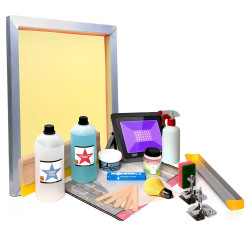
DIY screen printing kit — complete set — The most complete kit for those who want everything included, ready to use from day one.
→ View the DIY kit
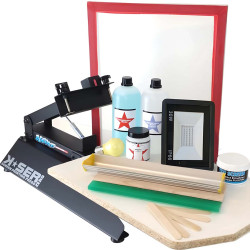
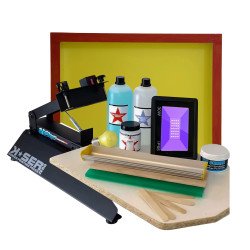
Professional kit with K-SER Zero press — For precise, repeatable results from the very first print. The screen printing press is already included.
→ View the kit with K-SER Zero
→ Read the complete beginner's guide to screen printing at home
Silk Screen Printing Starter Kit Benefits for Home Use
A silk screen printing starter kit provides an efficient foundation for learning core printing techniques while working with tools that deliver stable, predictable results. These sets help users understand how screens, inks, and frames interact, making it easier to produce clean, consistent prints on textiles, paper goods, and a range of creative projects.
Designed for versatility and reliability, these kits support smooth ink application, dependable stencil creation, and steady workflow development as your skills expand. Their structured layouts reduce errors and simplify each stage of printing, making them ideal for testing new concepts or producing small batches of customised items.
Keygadgets – 40 Years of Screen Printing Experience
Keygadgets has been active in screen printing and pad printing for over 40 years. Every kit in our catalogue has been selected by people who know the craft from the inside. We ship across Europe and worldwide.
Questions about which kit to choose? Our team is available on WhatsApp with real screen printing know-how.
Upgrade your creative setup today — choose the screen printing kit that fits your workflow, enjoy fast worldwide delivery, and start producing personalised prints at home with a complete, ready-to-use solution.
FAQ
What is included in a DIY screen printing kit?
A typical DIY screen printing kit comes with everything you need to begin printing on textiles, paper and other craft surfaces. You'll usually find a pre-stretched screen or frame, a quality squeegee, basic inks ready for fabric or paper, and setup tools such as tape, spatulas or cleaning supplies. Some kits also include emulsion or stencil supplies to help you create your own design. This all-in-one combination enables you to move from design to print without sourcing multiple separate items.
Which beginners screen printing kit is best to start with?
The best beginner's screen printing kit is one that covers the essential printing workflow while keeping the setup simple and manageable. Look for a kit that includes a durable screen, user-friendly squeegee, starter inks compatible with various surfaces, and clear alignment tools or instructions. It should allow you to explore printing techniques on T-shirts, bags or paper without overwhelming complexity. A kit that supports practice and learning will give you a solid foundation for growing your skills.
How to use a silk screen printing at home kit?
Using a home silk screen printing kit involves a few key steps: first, prepare your workspace and select a clean substrate (like a T-shirt or paper sheet). Next create or apply the stencil on the mesh screen, position it properly, then place ink at the edge of the frame and pull the squeegee evenly across the image area. After printing, let the ink cure or dry according to the ink type provided in the kit. Proper cleaning of the screen after use ensures future prints remain sharp and helps protect your tools.
Are T-shirt screen printing kits good for custom apparel?
Yes, T-shirt screen printing kits are well-suited for producing custom apparel, whether you're creating one-offs or limited-run designs. These kits typically include components designed specifically for textiles: a screen with appropriate mesh tension, inks formulated for fabric, and tools to align and print on garments. With this setup, you can achieve clean edges, consistent print quality, and repeatability across multiple shirts. It's a practical solution for hobbyists, small business owners or anyone looking to produce wearable designs with professional appeal.
When should I choose a mini screen printing kit?
A mini screen printing kit is ideal when you're working in a smaller space, printing occasional projects, or just testing the process before scaling up. Choose a mini kit if you have limited table space, plan smaller format prints, or want a budget-friendly entry into screen printing. While it may have fewer features or less workspace capacity than full-scale systems, it still supports all the core steps of the process. Once you're comfortable and want to tackle larger runs or more complex designs, you can consider stepping up to a more comprehensive kit.
How much does it cost to get started with screen printing?
With a Keygadgets starter kit you can begin from around €109. If you want a screen printing press already included in the set, the complete kit with the K-SER Zero starts from €299. All kits include fast delivery across Europe and worldwide.